The Meat Selection Debate: Lamb vs. Beef vs. Heritage Blends
Travel through Athens, Thessaloniki, or the Cyclades, and you will encounter passionate disagreement over the correct protein base for moussaka. In traditional pastoral regions where sheep and goats outnumber cattle, coarsely ground mutton or lamb is universal. In contemporary urban tavernas, beef chuck is often preferred for its milder profile.
Our culinary testing demonstrates that a 50/50 blend of coarse ground lamb shoulder and beef chuck yields the definitive moussaka profile. The lamb provides distinctive grass-fed fat richness and musk that responds to sweet spices, while the beef provides gelatinous body, clean savory depth, and prevents the filling from becoming overly greasy.
The Dry Braise Imperative
The defining failure of amateur moussaka is a sloppy, wet meat sauce that leaks juice into the roasted aubergine layer during baking. To prevent this, Greek cooks execute a rigorous dry reduction braise.
When browning the meat in hot olive oil, work in batches so the meat sears and browns rather than steams. Drain any pooled surface grease, leaving approximately two tablespoons of seasoned cooking fat. Once finely diced yellow onions and grated garlic have softened into translucent sweetness, the aromatic magic begins.
The Spice Trinity: Ceylon Cinnamon, Allspice, and Cloves
Italian ragù relies on mirepoix and wine; Greek kimas relies on sweet, woody spices that evoke Byzantine trade routes.
- Ceylon True Cinnamon: Avoid bitter cassia bark when possible. A 3-inch quill of true Ceylon cinnamon simmered in the sauce imparts gentle floral sweetness without overpowering the meat. A half-teaspoon of ground cinnamon can be added at the end for an aromatic top note.
- Pimento Berries (Allspice / Bahar): Four to five cracked whole allspice berries lend an earthy, clove-and-nutmeg warmth that anchors the meat to the sweet roasted eggplant.
- Whole Cloves & Greek Bay Leaves: Two whole cloves provide intense resinous sharpness; two dried wild Greek bay leaves add herbal eucalyptus balance.
Deglazing with Dry Peloponnesian Wine
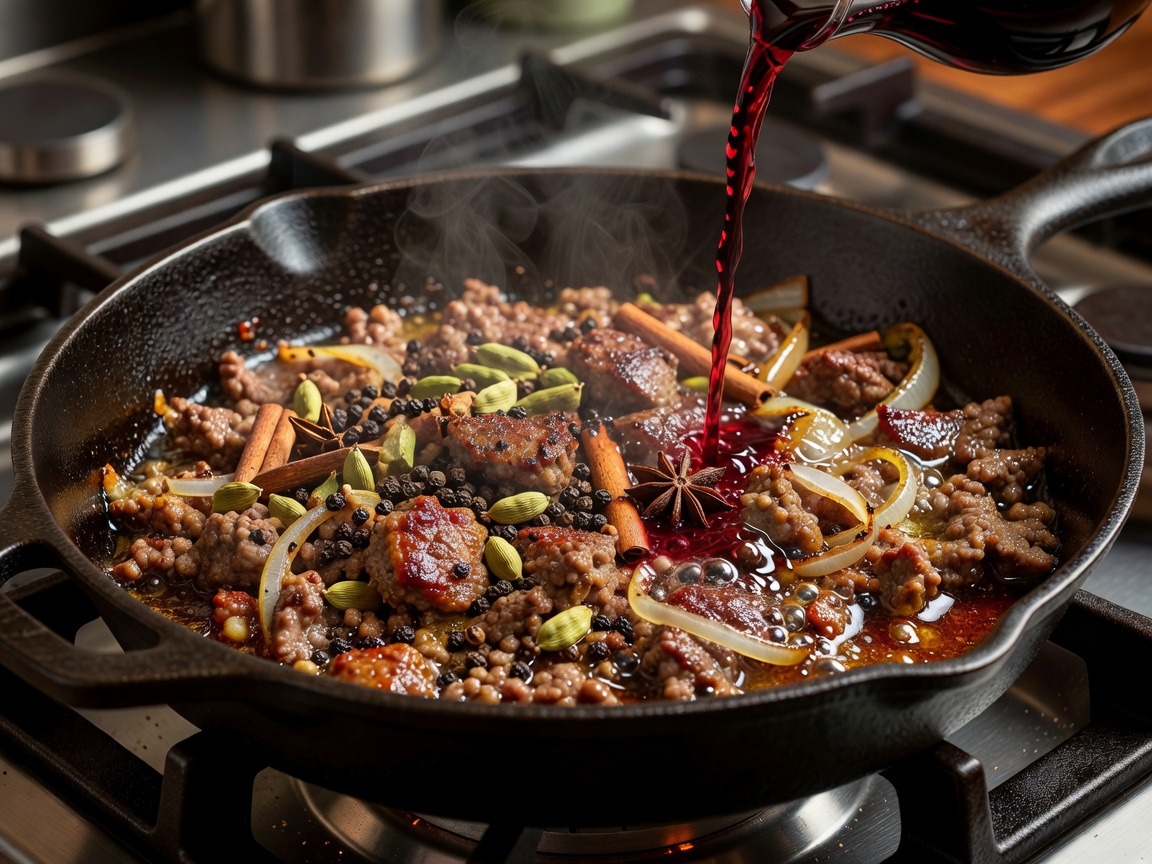
After stirring in double-concentrated tomato paste (pelte) to toast it against the bottom of the pot, deglaze with 150ml of dry Greek red wine — ideally an Agiorgitiko from Nemea or a dry Xinomavro from Naoussa. Scrape up every bit of caramelized fond. Allow the wine to reduce by three-quarters, leaving rich acid notes while burning off alcohol vapors.
Add grated fresh summer tomatoes or crushed San Marzano plum tomatoes. Simmer uncovered over medium-low heat for 35 to 45 minutes until all visible liquid evaporates. When you drag a wooden spoon across the bottom of the pan, the parted path should remain clear for two full seconds before closing.
Ingredient Alternatives for Dietary Variations
For cooks looking to adapt the ragù to specific preferences without losing Hellenic character:
- All-Beef Chuck: Replace the lamb entirely with 80/20 grass-fed beef chuck. Add 1/2 teaspoon of smoked Greek paprika to introduce subtle earthiness.
- Vegetarian Lentil and Walnut Base: Brown French green Puy lentils combined with chopped toasted walnuts and finely minced cremini mushrooms. The mushroom glutamates and walnut oils replicate the structural chew and rich mouthfeel of traditional lamb.
- White Wine Substitution: A crisp Assyrtiko white wine from Santorini can replace red wine, imparting clean mineral acidity that highlights tomato sweetness.