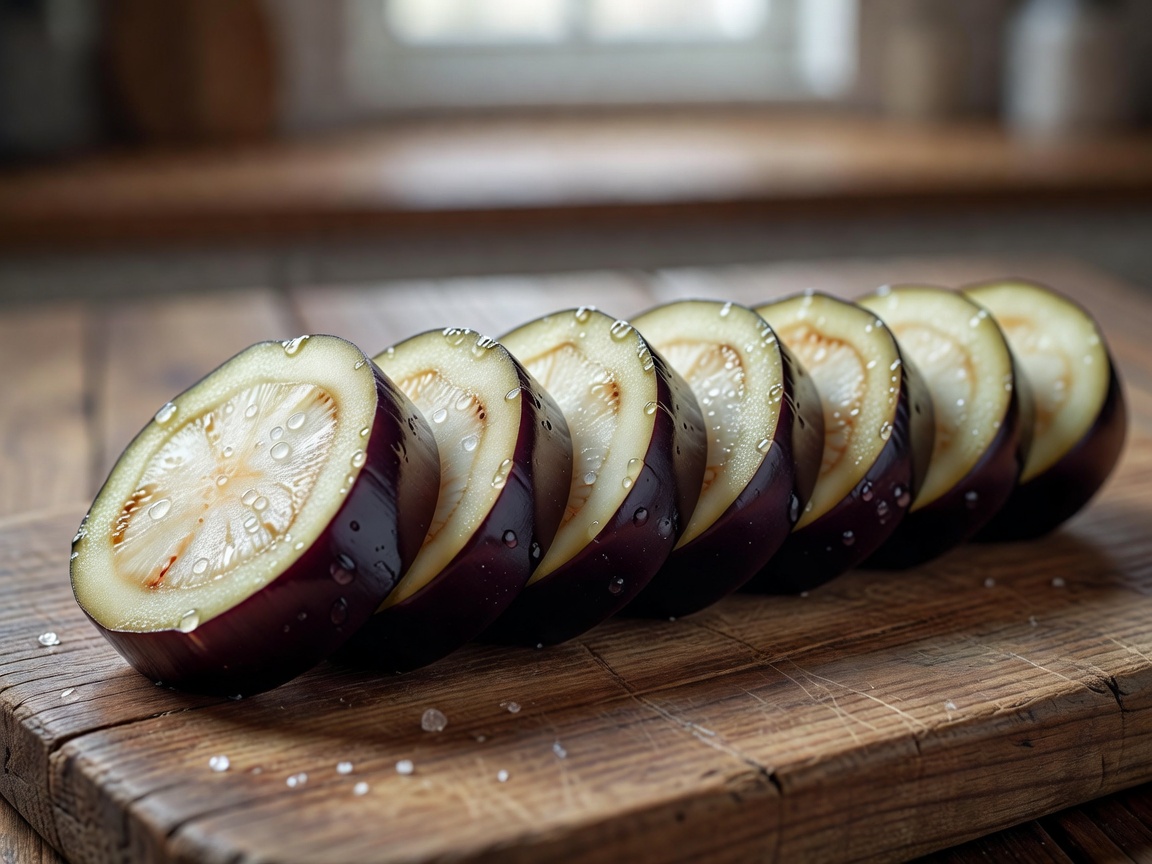
The Anatomy of the Aubergine in Greek Cooking
In Greece, the eggplant (melitzana) is revered for its spongy, absorbent flesh that softens into a silk-like velvet when kissed by heat and olive oil. However, that cellular sponge is both a gift and a culinary trap. Raw eggplant flesh consists of micro-air pockets suspended in a matrix composed of over 92% water.
If placed directly into a casserole without rigorous pre-treatment, that internal moisture expels under the weight of the meat ragù and béchamel, boiling rather than caramelizing the vegetable and pooling at the bottom of your ceramic baking dish. The result is a watery, structural collapse that turns the bottom layer into mush.
Step-by-Step Moisture Extraction: Osmosis and Salting
While modern hybrid aubergines carry substantially less bitter solanine than historical heirloom cultivars, salting remains non-negotiable for architectural reasons:
- Slicing Uniformity: Slice globe eggplants lengthwise into even planks exactly 8mm to 10mm thick (approximately 3/8 inch). Transverse round slices create sliding discs; lengthwise planks act like architectural floorboards that interlock during casserole assembly.
- The Coarse Sea Salt Sweat: Lay the planks inside a large colander or over parchment-lined wire cooling racks. Dust both sides generously with coarse Mediterranean sea salt. Let the slices rest undisturbed for 45 to 60 minutes.
- The Osmotic Purge: The high ionic concentration on the exterior pulls intracellular water through the cell walls via osmosis. You will see amber-tinted droplets bead across the surface.
- Rinsing and Pressing: Rapidly rinse the planks under cold running water to remove excess surface salinity. Lay them flat between double layers of clean, unbleached linen kitchen towels. Apply firm pressure using a rolling pin or baking sheet weighted with cast iron pans to press out collapsed fluid.
Roasting Versus Traditional Pan Frying: A Critical Comparison
Taverna cooks traditionally deep-fried aubergines in bubbling olive oil until deep brown. While decadent, this technique presents severe structural and digestive liabilities.
| Evaluation Factor | High-Heat Sheet-Pan Roasting (Recommended) | Traditional Shallow Pan Frying |
|---|---|---|
| Oil Absorption | Controlled (approx. 3–4 tbsp total for entire dish) | Extreme (planks absorb up to 250ml oil like sponges) |
| Internal Moisture | High evaporation through continuous convection air | Steam trapped inside sealed fried crust, later leaches out |
| Layer Structural Hold | Tender yet resilient; binds effortlessly to potatoes | Slick and oily; slides when sliced through warm béchamel |
| Kitchen Cleanup | One-pass parchment cleanup, zero hot oil spatters | Heavy oil fumes, persistent stovetop splatter |
The High-Heat Roasting Protocol
Preheat your oven to 200°C (400°F) convection or 220°C (425°F) standard. Brush both sides of the dried eggplant planks lightly with cold-pressed extra virgin olive oil using a pastry brush. Arrange in a single layer on parchment-lined heavy baking sheets, ensuring planks do not overlap.
Roast for 20 to 25 minutes, flipping once at the 12-minute mark. Look for golden-brown blistered patches and pliable centers. Remove from the oven and allow them to steam off on wire racks. They will be concentrated in natural sugars, condensed in texture, and primed to support the spiced meat ragù.
Authentic Greek Cultivar Alternatives
If classic dark purple Mediterranean globe eggplants are unavailable, consider these regionally attested variations:
- Tsakoniki of Leonidion: A Protected Designation of Origin (PDO) long, thin, purple-striped variety known for sweet, seedless pulp that requires little salting.
- Santorini White Eggplant: Renowned for its white skin and sweet flesh with minimal seeds. It browns rapidly and holds its shape exceptionally well.
- Italian Graffiti / Zebra Aubergine: An excellent widely accessible alternative with tender skin and dense meat that absorbs aromatics without turning watery.